
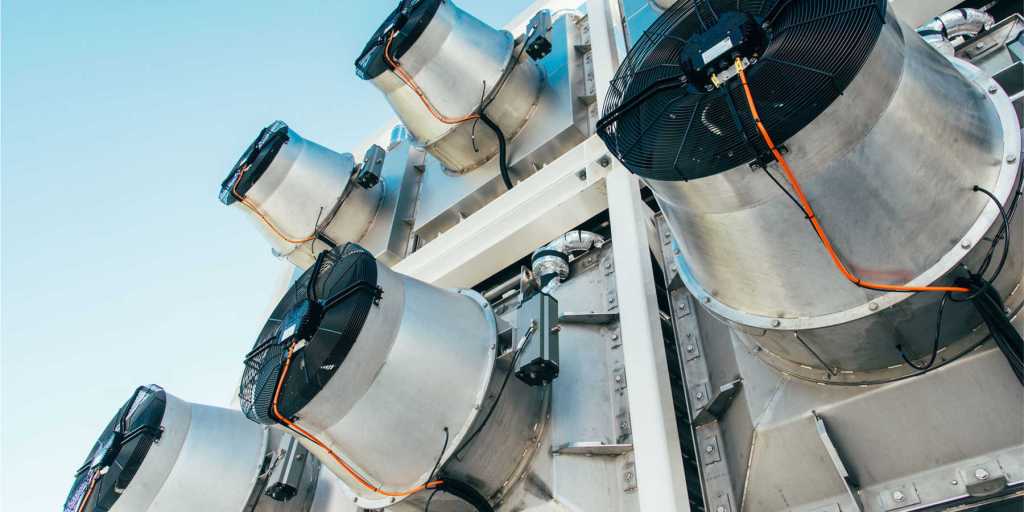
Global warming and climate action are back in the spotlight with carbon removal technologies, the high-profile player at the stage with DAC providing a new solution for getting rid of additional carbon dioxide directly from air. Synthetic carbon capture is chemically and physically scaled-a new way of wanting to tackle climate change that, unlike natural means, works well in integration with existing industrial processes.
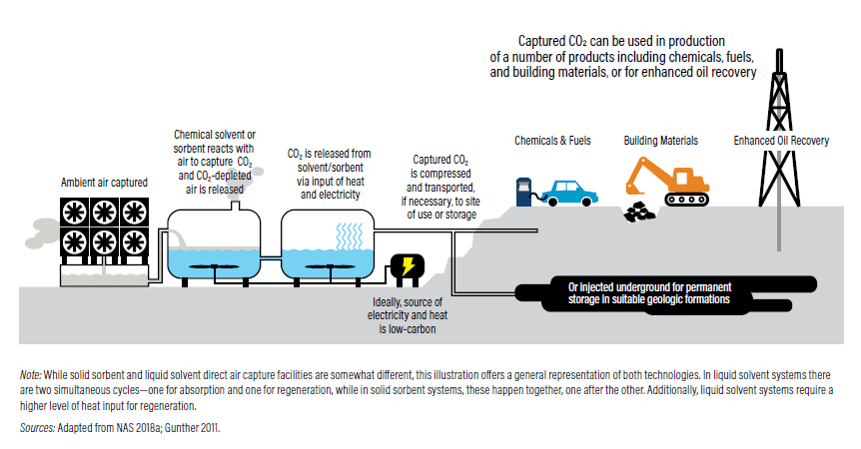
The fundamental working principle of DAC involves drawing in atmospheric air and chemically separating carbon dioxide from it. There are two main methods used in DAC systems:
Liquid Based DAC systems: In these systems, air is passed over a solution containing chemicals such as hydroxides or amines, which react with CO₂ and form a stable complex. The compressed air is then heated to provide electricity and remove CO₂ for reuse
Solid Based DAC systems: Here, materials such as amine-coated filters capture CO₂ from the air as it passes through. The carbon dioxide binds to the surface of the filter. Heat or vacuum is used to release it and regenerate the material for further use.
Some key benefits of DAC include:
- Land efficiency: Unlike natural solutions, DAC systems require minimal land and can be installed in diverse locations.
- Scalability: These systems are designed to scale up, making them suitable for large-scale carbon removal efforts.
- Carbon negativity: When powered by renewable energy, DAC systems can achieve net-negative emissions, directly reducing atmospheric CO₂ levels
Despite the great promise, direct air capture suffers high levels of cost and energy demand that places limits on its accessibility and uptake. Ongoing research is working on these problems, generally improving material efficiency, lowering energy requirements, and developing affordable systems. Moreover, innovation in renewable energy integration and modular design would greatly improve the viability of DAC in the years to come.
Hence, Direct Air Capture is a revolutionary process of climate change mitigation, addressing the cause of the problem from ground zero-excess atmospheric carbon dioxide. Finalized by immediate impact, its ability to scale up, and versatility, DAC remains fixed as a foundational technology in the bid for a sustainable future. Innovations will continue to expand its capability dramatically and contribute substantially to global decarbonization efforts.
 Ecovation