
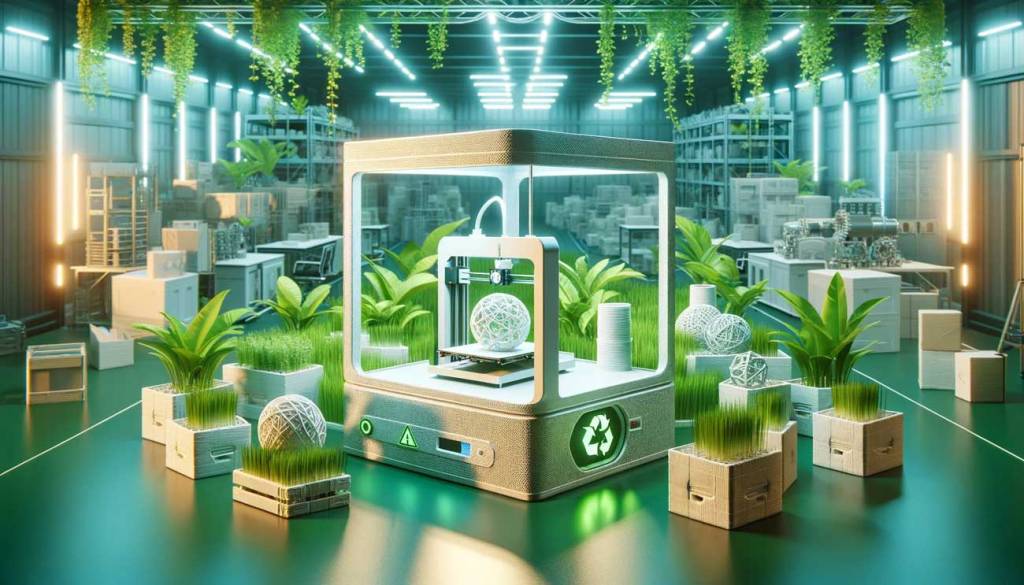
A technique that is used from prototyping to end products, 3d printing is used in various industries like healthcare, automotive, construction, and aerospace. Not only can it produce complex designs out of a plethora of materials, but it is also relatively cheap relative to many manufacturing techniques, mainly due to the minimal waste produced, as it is an additive technology.

The most common material used to 3d print is plastic, due to its suitable melting point and various other physical properties. However, plastic is not a sustainable material, thus the products produced are harmful for the environment.
Below is a list of possible solutions that people, from enthusiasts to industries, can implement
Biodegradable Materials
- PLA – a plastic commonly used for 3d printing, which is made of corn starch, thus being biodegradable and sustainable.
- Infused filaments – Other biodegradable materials can be used which have a greater strength compared to PLA, such as wood-based, or cellulose based filaments.
- Polyhydroxyalkanoates (PHA) – Another material, that is not only more biodegradable than PLA, but offer increased strength and flexibility as well.
Recycled Materials
A method to recycle the plastic waste produced is to recycle it and reuse it for 3d printing purposes. Plastics such as Polyethylene Terephthalate Glycol (PETG) from plastic bottles can be recycled into spools of filament for both industrial and hobby purposes. In fact, DIY mechanisms can be made which melt the plastic of bottles and extrude a filament that can be used for 3d printing, without any hassle. Same can be done with the support structures produced while 3d printing.
Some precautions should be kept in mind while recycling plastic.
- Materials should be segregated: This includes segregation between the different types of plastics as well (ABS, PLA, PETG, Nylon, etc.)
- No contaminations: impurities of other materials and substances should be minimized to ensure good quality recycled filaments
- Temperature: Different materials have different melting points, which must be maintained to create flawless spools of printing filaments with no air bubbles
Conclusion
The ease at which these solutions can be implemented for both hobbyists and professionals shows how incredibly sustainable 3d printing can be made. It can play a vital role in the circular economy, as it reduces material required for production, reuses waste products, and recycles plastic.
 Ecovation